
Environmental Leadership
Care for the world you are learning to lead.
From a shared meal to a solar-powered building, FFI connects environmental learning with the choices we make every day.
OUR VALUES, IN EVERYDAY DECISIONS
Environmental practices at FFI
Environmental leadership becomes real when young people can see it, question it and practice it.
At FFI, that learning begins in the places where we live together. A meal raises questions about food and resources. A solar array makes energy visible. Time outdoors invites us to notice the other living things that share our space.
Our campuses and programs connect those questions to responsibility. Young people can explore the choices behind an everyday task, consider who and what is affected, and take that thinking back to their own communities.
It is part of the same commitment that runs through our leadership work: understand yourself, listen to others and care for the world around you.
Explore our approach
01 / FOOD IS PART OF THE CURRICULUM
Food and environmental learning
Where did the ingredients come from? How were they grown? What happens to the food we do not eat?
FFI introduced plant-based meals in 2022. Food is also a way into learning about nutrition, food access, waste and the relationship between people and the natural world.
Environmental learning has included gleaning with NH Gleans and nutrition and cooking activities with Charlotte from Emery Farm. These experiences connect a shared meal to the work and resources behind it.
Explore plant-based learning
during the 2016 renovations
02 / THE BUILDING IS PART OF THE LESSON
Solar energy
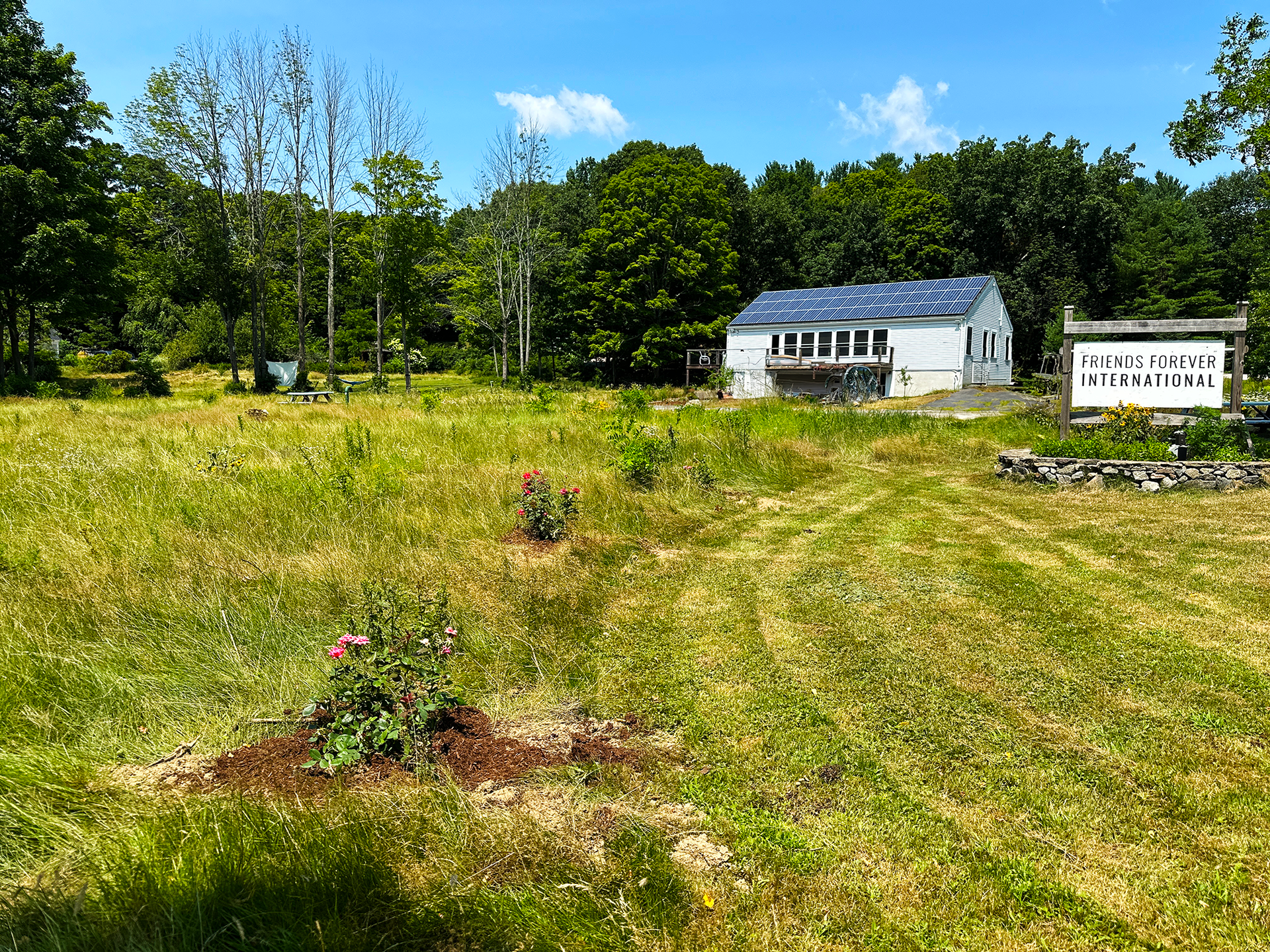
The solar array at FFI’s Durham office was installed by ReVision Energy in 2016. It gives participants a real system to connect with questions about electricity, resource use and campus operations.
The Josephine A. Lamprey Fund and the Thomas W. Haas Fund of the New Hampshire Charitable Foundation sponsored the panels and installation. FFI’s environmental work has also included efficient heating and cooling units and composting during programs.
The farmhouse solar installation is now complete, extending renewable energy at the Durham campus beyond the existing office array.
Explore the solar campus projectOpen the original energy dashboard
The 45-panel figure describes the 2016 installation. Historical energy and emissions totals have not been presented as current readings.
03 / MAKE SPACE FOR OTHER LIVING THINGS
Wildlife on our campus
FFI’s Durham grounds provide space for pollinators, wildlife and people. The Explore the Wild initiative connects campus stewardship with opportunities to notice and learn from the natural world.
Observing the campus landscape makes the work tangible. A young person can look closely at a flower, notice what visits it and begin asking how the landscape supports life.
Community members can contact FFI about current grounds care and volunteer projects. Caring for a place can become a shared responsibility.
Discover Explore the WildTURN CURIOSITY INTO DEEPER LEARNING
Environmental activities
FFI’s course library connects environmental questions with science, society and practical experience. Explore these themes, then discuss the right program with our team.
How do ecosystems work?
Follow connections between organisms, habitats and the people who use them. Related course offerings include Ecology & Ecosystem Research, Marine Science and New Hampshire Coastal Biome.
Explore the course libraryHow do our choices affect resources?
Explore the systems behind everyday decisions. Renewable Energy, Sustainable Agriculture, and Food, Environment & Society offer different ways into questions about energy, land and food.
Explore the course libraryHow can learning become local action?
Immersion participants develop Community Action Projects around needs in their home communities. The presentation archive includes environmental ideas, alongside projects addressing education, access and connection.
Watch community project presentationsCourse names come from FFI’s published curriculum. Availability, program content and any credit arrangements should be confirmed with the programs team.

04 / LEARN FROM THE PLACE AND ITS PEOPLE
Environmental
learning
in Belize.
The Diane M. Seagren Rainforest Academy in Boom Creek, Belize, extends this work into a different environment. The 30-acre property was gifted to FFI by Leonard Seagren in 2018.
The off-grid campus offers a setting for environmental leadership, sustainability and community learning. FFI’s vision includes working with local partners and learning from local knowledge as the site develops.
Belize is part of a longer relationship with a place and its people. Program design, site improvements and community partnerships all shape what learning there can become.
Explore FFI in BelizeTAKE PART
Get involved in environmental projects
Share a skill in energy, conservation or campus care. Introduce us to a community partner, propose a practical project or help support the places where young people learn.
Talk with FFI ↗ Support a campus ↗Learning outdoors
The campus is part of the lesson.
At Durham, the grounds give participants a place to observe wildlife, explore local ecology and take part in caring for the spaces they share.
Continue the story